


Finding a down comforter that genuinely works across all four seasons sounds simple until you start comparing options. You want something cozy without being stifling, fluffy without being heavy, and warm enough for winter without turning into a sweat-inducing mess by June. Most “all-season” labels don’t tell you much on their own — what actually determines year-round comfort is a specific balance of fill weight, breathable shell fabric, and even loft distribution.
What Actually Makes a Comforter “All-Season”
An all-season down comforter should do one thing exceptionally well: stay comfortable across a wide range of room temperatures without forcing you to swap bedding every few months. That comes down to a moderate fill weight, a shell that manages moisture well, and construction that keeps the down evenly distributed rather than shifting into cold spots over time.
Research on sleep environments backs this up — when bedroom temperatures drop below about 68°F or climb past 77°F, sleep efficiency measurably declines. An all-season comforter’s real job is buffering against that swing rather than amplifying it, which is a higher bar than simply being “medium warm.”
The Middle-Ground Pick for Most Households
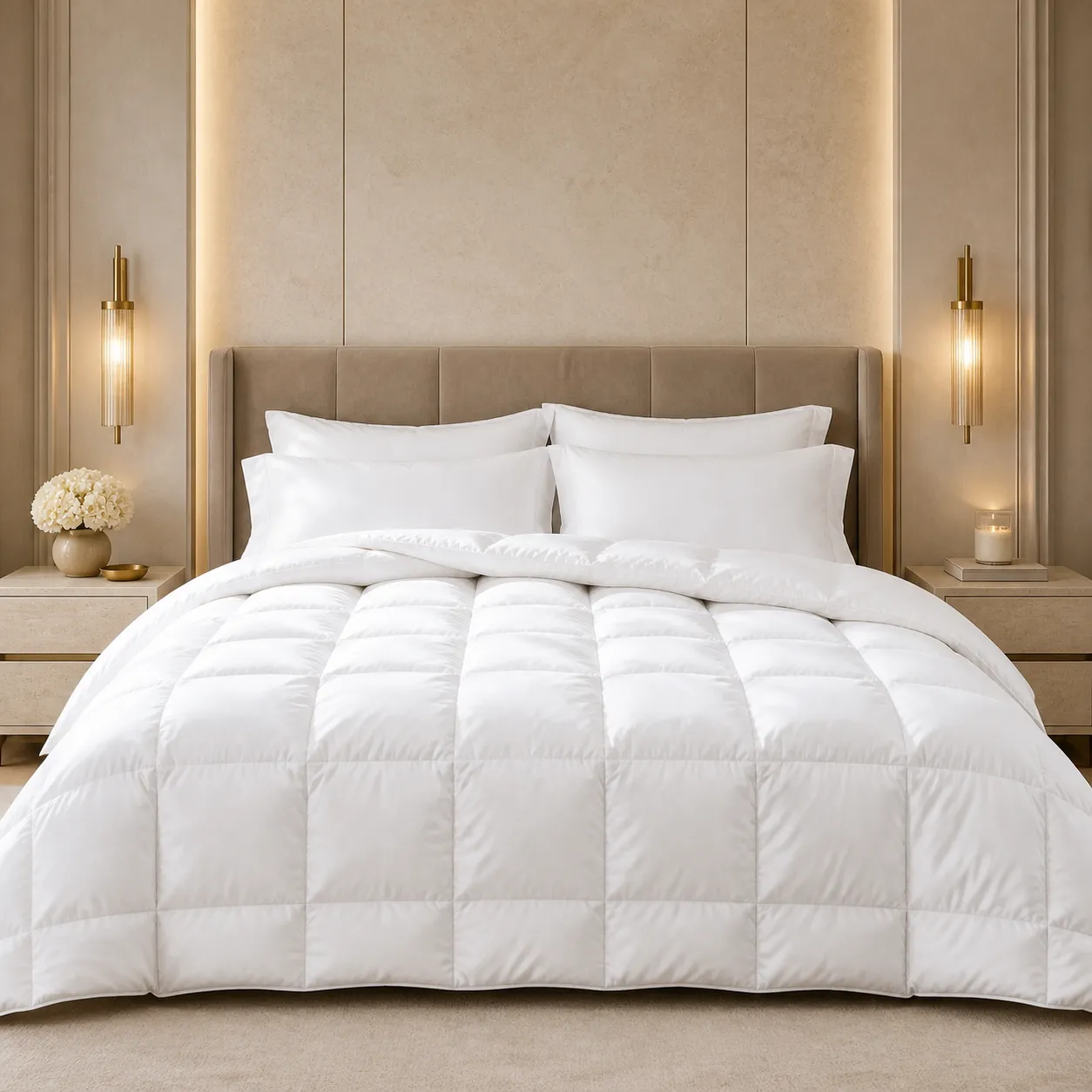
For households that don’t want to think too hard about warmth levels, a genuinely versatile option is worth prioritizing over the fluffiest-looking choice. The Cozy365 Premium Down Comforter is built around exactly that use case — a breathable cotton shell and moderate loft that holds up reasonably well whether the room is running slightly warm or slightly cool, which matters more than raw warmth for most bedrooms that aren’t extreme in either direction.
Why Couples Need a Different Strategy
Two people rarely run the same sleep temperature, which makes “all-season” a trickier target for shared beds than for solo sleepers. Rather than forcing one partner to compromise on a single medium-warmth comforter, it’s often smarter to think in terms of layering — a lighter organic down comforter as an all-season base with the option to add a throw for the colder partner, or choosing a breathable shell that won’t trap heat for the partner who runs warm. This is where customizable or mix-and-match bedding setups tend to outperform a single one-size-fits-all insert.
If You Run Warm Most of the Year
Some households don’t need “all-season” so much as “warm-season with occasional winter backup.” For sleepers who consistently run hot, a lightweight, breathable option does more good than a heavier all-season pick that still feels like too much most nights. The Summer-Breeze Down Comforter works well in that role — light enough for warm months, but still substantial enough to layer under a blanket when temperatures drop, rather than needing an entirely separate winter comforter.
If Your Bedroom Runs Genuinely Cold
On the other end, an all-season comforter that’s calibrated for mild climates simply won’t cut it in a consistently cold bedroom. Rather than layering multiple blankets on top of an underpowered comforter, stepping up to a higher-loft option built for real warmth solves the problem more cleanly. The Organic Cotton Goose Down Comforter in its Ultra-Warm version is designed for exactly this — sleepers who are cold most of the year and need more insulation than a true all-season pick can offer, without switching to a bulkier synthetic alternative.
Shell Fabric Still Matters, Even for a “Filler” Piece
It’s tempting to treat an all-season comforter as a background item, but shell fabric affects year-round performance as much as fill does. Organic cotton is the most versatile choice — breathable, easy to live with, and unlikely to trap heat regardless of the season. Linen adds a more textured, relaxed breathability that’s especially useful in humid climates. Cooling performance fabrics are worth considering if you run warm for most of the year and only need real warmth for a handful of winter weeks.
Construction Details Worth Checking
Baffle-box construction keeps down evenly distributed across the comforter rather than letting it shift into clumps after repeated washing, which matters more for an all-season piece than a seasonal one since it gets used — and washed — far more often. Corner loops are worth confirming too if you plan to use the comforter inside a duvet cover, since they’re what keeps a moderate-weight insert from sliding around over months of regular use.
The Bottom Line
The right all-season down comforter isn’t the one marketed as doing everything — it’s the one whose fill weight and shell fabric actually match how your household runs temperature-wise most of the year. Hot sleepers should lean lighter and more breathable even in an “all-season” pick, cold sleepers should lean toward higher loft even if it means less flexibility in summer, and couples are usually better served by a layering strategy than a single compromise comforter. Get that starting point right, and “all-season” stops being a vague label and starts being an accurate description of how the comforter actually performs.
FAQ
What actually makes a comforter “all-season” instead of just medium warmth?
It’s the combination of moderate fill weight, a breathable shell, and even construction that keeps the comforter from feeling too warm or too thin across a range of room temperatures — not just a single “medium” warmth rating on the label.
Can couples share one all-season comforter?
Sometimes, but two people rarely run the same temperature, so a single medium-warmth comforter is often a compromise for both. A layering strategy — a lighter base comforter plus an optional throw — usually works better than forcing one insert to satisfy both sleepers.
Should hot sleepers still consider an all-season down comforter?
Yes, as long as it leans lighter and more breathable within the all-season category. A true all-season pick shouldn’t feel like a winter comforter — if it does, a lighter or cooling-shell option is likely the better fit.