

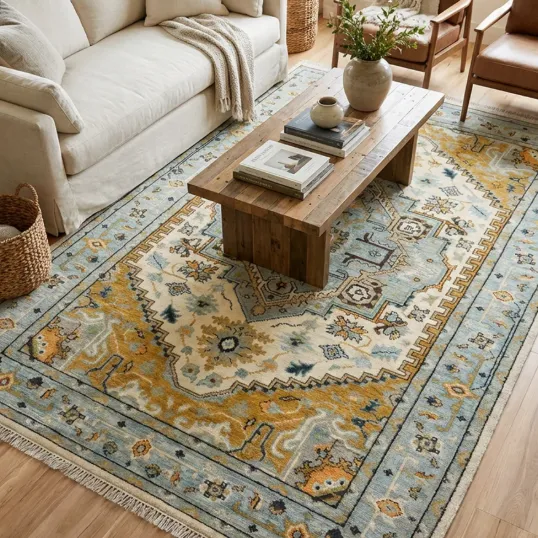
Ask most people when to bring out a wool rug, and the answer comes fast. Winter, obviously, is something to warm a cold floor before the temperature drops further. Not wrong exactly. Just incomplete. Wool rugs do something more interesting than trap heat, and once you understand the mechanism, it changes how you’d actually use one across a full year rather than just three cold months of it.
What The Fiber Is Actually Doing
Wool isn’t passive, as most people assume. Each fiber grows in a natural crimp, a tight little coil, and once that’s spun and woven into a handmade rug, the coils trap air pockets all through the structure. In winter, those pockets hold warm air against a cold floor. Fine, that matches the usual story. What people don’t expect is the other half of it:
-
The same air pockets slow heat from rising up off a warm floor in summer, working as a barrier in the opposite direction.
-
Wool fiber can hold close to a third of its own weight in moisture without ever feeling wet underfoot.
-
That moisture gets released slowly rather than sitting and turning sticky, which matters a great deal during a humid Indian monsoon.
-
Cotton, by comparison, mostly just soaks and stays damp until it’s properly dried out. Same fiber. Two directions. Most people only ever hear about the first one.
A Wool Carpet Isn’t A Wool Sweater, And Pile Height Is The Reason Why
Here’s the part worth being honest about rather than glossing over. A thick, high-pile wool rug, built purely for coziness underfoot, still traps more warmth than a flat, low-pile flatweave does, in any season. Wanting wool’s summer side to actually show up in a room means paying attention to construction, not just fiber.
A fine, low-pile wool carpet breathes the way the material is designed to. A dense shag pile insulates first and breathes a distant second, brilliant in January, less so in June. Pile height and weave density determine how much of wool’s actual range you can use. Buy blind to that distinction, and you might end up with a beautiful rug that only really works for a third of the year.
Why This Matters More Here Than Almost Anywhere Else
Most of India doesn’t get four distinct seasons. It gets a long hot stretch, a wet one, and a relatively short cool window, and a rug bought purely with January in mind ends up doing very little for the other nine or ten months. Wool rugs for living room spaces benefit from this kind of thinking more than most, since a living room gets used daily regardless of what the calendar says.
A handful of things tend to make the real difference here:
-
The right pile weight for how the room actually gets used, not how the showroom photo looked
-
Natural lanolin in the fiber resists staining without any chemical treatment added on top
-
Genuine elasticity, meaning the pile bounces back from furniture indentation rather than staying flattened
-
A surface that holds up through both a sharp winter and a long, humid monsoon stretch without needing to be swapped out twice a year
Shopping for wool carpets online, you’ll see most of these points claimed by nearly every seller. Unlike a lot of rug marketing, they actually happen to be true.
What’s Worth Checking Before You Buy
Pile height comes first; lower piles are generally more breathable and better suited to year-round use. Weave or knot density comes next: denser construction holds shape and resists matting no matter how hard the room gets used. Fiber source matters too. Finer wools like merino tend to feel softer underfoot and regulate temperature more precisely than coarser grades ever manage.
None of this makes a thick, winter-weight wool rug the wrong choice. It just means understanding what you’re actually buying it for. A plush, high-pile piece for a formal room, used mostly in cooler months, is fundamentally different from a lighter weave meant to withstand everything a home goes through over twelve months.
Browse Wool Rugs At Kesari Home
Kesari Home’s wool collection runs across hand-knotted, hand-tufted, and hand-woven construction, spanning a genuine range of pile heights and weights, so choosing between a dense winter piece and a lighter, year-round weave is an actual option rather than a guess. Explore the full wool rugs online collection in India to find the right weight for your space, or get in touch with the team directly for guidance on matching construction to how a room really gets used throughout the year.